Panaceia or Hygeia

immunize yourself against the pandemic of lifestyle diseases

Pfizer abandons “cholesterol”

Posted by Colin Rose on October 1, 2008

After spending many $billions in DTC ads and bribes to doctors to convince the world that “cholesterol” is the cause of atherosclerosis, the most common fatal disease, Pfizer has admitted there is no more profit to be made from the myth of “dyslipidemia” it created. Its much hyped drug, torceptripib, which did all the “right” things to blood cholesterol actually worsened atherosclerosis.

So now Pfizer is directing more of its research toward Type 2 diabetes, a disease directly related to obesity, which is directly related to the moral hazard effect created by the cholesterol myth (I can eat anything as long as my cholesterol is low). Very clever marketing! Create diseases then sell high profit drugs to attempt to treat them.


PFIZER REFOCUSES ITS STRATEGY
BY SHANNON PETTYPIECE Bloomberg News
National Post
01 Oct 2008

Pfizer Inc. will abandon early-stage research on heart drugs as part of a strategy to sharpen its focus on ailments such as cancer, Alzheimer?s disease and diabetes where the chances of a bigger profit are greatest. The New York-based company, the…read more…

Posted in atherosclerosis, cholesterol, coronary artery disease, diabetes, Type 2, drugs, obesity, statins | Tagged: , , , , , | No Comments »

Obesity weighs heavy on heart

Posted by Colin Rose on September 22, 2008

Bottom line: obese people have heart attacks at least ten years sooner and have much more diabetes than thin people, regardless of their blood cholesterol. So all those who say fat is OK as long as you are happy are wrong. And all those drug dealers say you are OK as long as you take a statin to lower your “bad” cholesterol are selling you a very expensive mirage.


Obesity weighs heavy on heart: study
SHARON KIRKEY CANWEST NEWS SERVICE
The Gazette
22 Sep 2008

Heart attacks are hitting the overweight more than a decade sooner than ?normal? weight people, researchers are reporting. A study of more than 111,000 people is one of the first to put real numbers to the risk of obesity and suggests ?excess…read more…


Posted in atherosclerosis, cholesterol, coronary artery disease, diet, obesity | Tagged: , , , , | No Comments »

Effectively treating atherosclerosis without angioplasty or bypass

Posted by Colin Rose on September 17, 2008

Below is a example of the issues involved in treating chronic coronary atherosclerosis presented by an intelligent patient who asked questions about treatment and did not accept the mainstream opinion without good evidence.

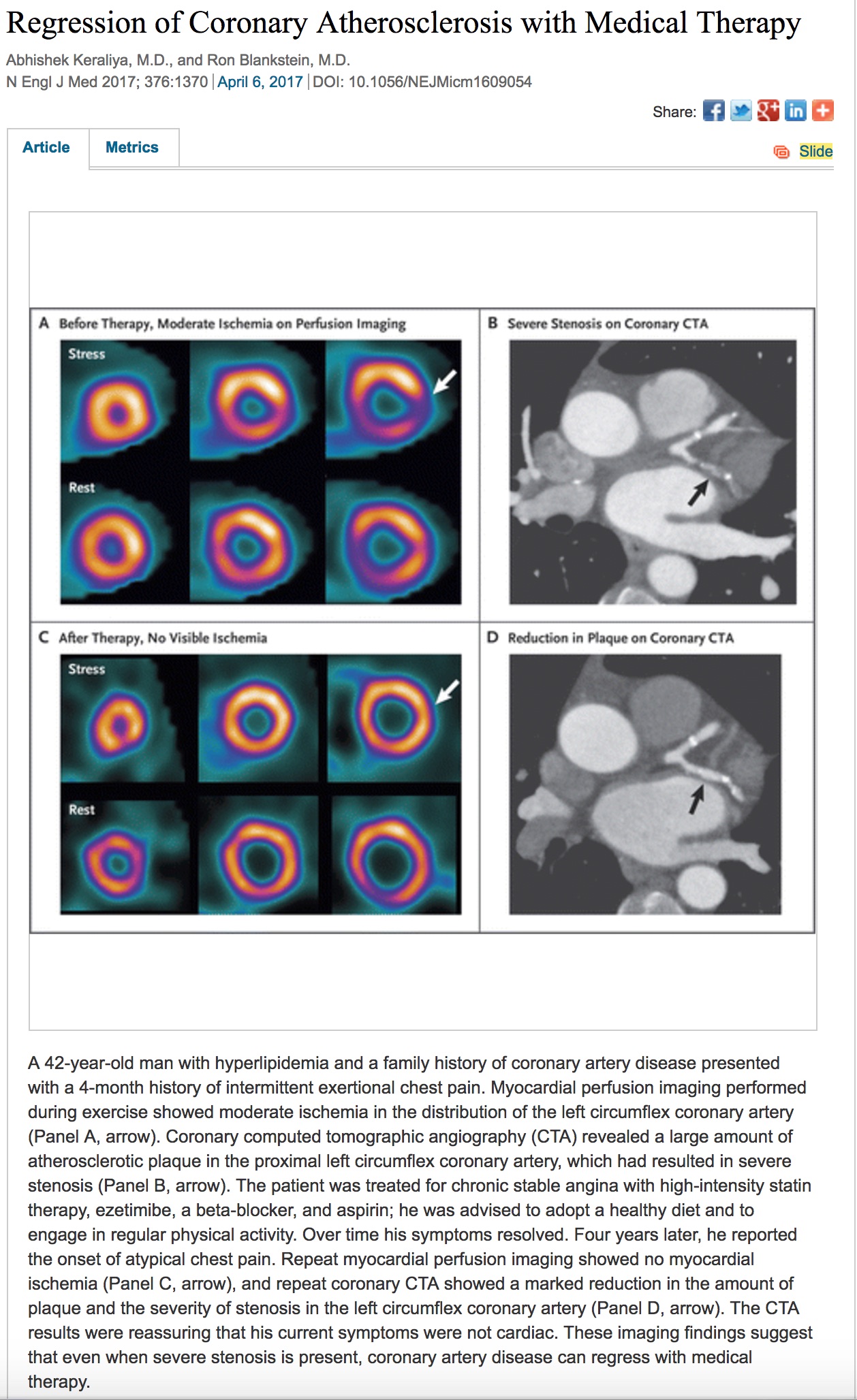
The vast majority of patients with chronic coronary artery atherosclerosis can be treated as the patient described here. Most cardiologists still believe the profitable myth that heart attacks can be prevented by “treating” those blockages seen on a coronary angiogram. We now have good evidence that such blockages are composed of older, harder plaques that are less likely to rupture and cause a sudden total blockage and a heart attack. Angioplasty, stent or not, and coronary bypass are PALLIATIVE procedures indicated only for intractable symptoms related to decreased coronary blood flow reserve.

——————————————–

From ProCor

From the patient’s perspective: Effectively treating heart disease through diet, exercise, lifestyle and medication

In the late 1960s, Professor G. S. H. Lock was engaged in the development of the artificial heart to address cardiac conditions for which other alternatives were not available. Forty years later he writes, “Today it is difficult to argue that technological intervention on such a scale is really necessary on a routine basis. Even intervention through angioplasty and the insertion of a stent may offer little more than temporary relief.”

In this article, adapted from a longer feature in The Lown Forum, Professor Lock shares his experiences as a cardiac patient and his observations on the use of medical technology in cardiovascular care. The Lown Forum is a publication of the Lown Cardiovascular Research Foundation; ProCor is one of its programs.

Vikas Saini
President, Lown Cardiovascular Research Foundation
 
————————–

From the patient’s perspective: Effectively treating heart disease through diet, exercise, lifestyle and medication

G.S.H. Lock, Professor Emeritus and former Dean of Interdisciplinary Studies, University of Alberta, Edmonton, Alberta, Canada

My story begins, as it often does, with the onset of mysterious chest pains. My family physician immediately diagnosed it as angina, meriting further investigation. After numerous tests on treadmills and in machines whose operations are still a mystery to me, I was confirmed as a high-risk patient with a plumbing problem, usually described as coronary arterial occlusion. An angiogram was recommended and scheduled within two weeks. However, this seemingly routine procedure created a special problem for me because three of my colleagues had failed to recover from that very procedure. With apprehension, I listened to the consulting physician explain that the risk of complication was minimal (about 1%). I asked if there was an alternative. I shall never forget his answer: “Death.”

Needless to say, I was not reassured by this response from a very able doctor who was obviously bound by prescribed procedure. Even though he was careful enough to prescribe appropriate medication while I waited for the angiogram procedure, I sought a second opinion, at another hospital. This proved to be an equal waste of time. The physician simply described the use of angiography as a “no brainer” because he viewed it as the natural prelude to intervention. No other possibility was even considered.

These experiences led me to conduct my own extensive research on heart disease, its diagnosis, and treatment. The majority of cardiologists seem to favor intervention, with all of the technology that accompanies, if not drives, it. I, however, could not support such an approach except in emergencies or when surgery was clearly the only means by which a patient’s life could be improved if not saved. Through the Lown Cardiovascular Center I was able to confirm that a healthy minority of cardiologists are not interventionists, but believe instead that in the majority of cases, heart disease may be treated more effectively using medical therapy with its four components: diet, exercise, lifestyle, and medication.

At first glance, I thought that each of these would prove to be distasteful - something that would destroy the quality of life - but I found instead the very opposite.

Luckily for me, my wife is an excellent cook - dare I say chef? - and has developed the standard Mediterranean diet into such a variety of dishes that I eat better now than I did two years ago. This alone took my cholesterol level down well below the established safe limit.

Exercise, too, has improved my quality of life. My cardiologist at the Lown Center, Dr. Vinch, is himself and athlete and he reminded me that the heart is a muscle that needs to be nourished and exercised like any other muscle. Under his guidance, I began various walking exercises. At first, using a nitroglycerine spray to decrease the resistance of the peripheral vascular system, I took my daily walks in the river valley where I live. Gradually, the walks became longer and steeper. Today, I can briskly walk up and out of the river valley and then jog up 12 flights of stairs without any angina, and without using the nitroglycerine. 

Clinical Encounter 
Date Posted: 9 April 2008

Posted in atherosclerosis, cardiology, coronary artery disease, diet, drugs, professionalism, surgery | Tagged: , , , , , , , , , | No Comments »

AAMC Calls For Strict Limits on Industry Support of Medical Education

Posted by Colin Rose on August 26, 2008

It’s about time!

But I would extend the recommendations to eliminate all industry funding of CME. If doctors can’t pay for their own education who can?

There are many  industry funded chairs at medical schools, like the Novartis Chair at McGill that pays the head of cardiology, that should be eliminated and their endowments returned to the industry donors with interest. Surely, out of the $many millions collected by the cardiology department for various clinical services, McGill can afford to pay a salary to its head.

All online drug funded CME, like this, should also be eliminated.


AAMC Calls For Strict Limits on Industry Support of Medical Education.


Washington, D.C., June 19, 2008-The AAMC (Association of American Medical Colleges) today urged all medical schools and teaching hospitals to adopt policies that prohibit drug industry gifts and services to physicians, faculty, residents, and students, and to curtail the involvement of industry in continuing medical education activities. The recommendations were part of a new AAMC report, “Industry Funding of Medical Education,” unanimously approved by the association’s Executive Council. In adopting the report, the AAMC’s leadership urged all association members to implement policies and procedures, consistent with the report’s guidelines, by July 1, 2009.

The report was the result of a 14-month effort by an AAMC task force, established in 2006, to examine the benefits and pitfalls associated with industry funding of medical education, and to develop principles, recommendations, and guidelines to help medical schools and teaching hospitals better manage their relationships with industry. The panel was chaired by retired Merck Chairman and CEO Roy Vagelos, M.D., and the vice chair was William Danforth, M.D., former chancellor of Washington University. The task force membership included institutional leaders, faculty, residents, students, CEOs from the pharmaceutical, biotechnology, and medical device industries, ethicists, and public representatives.

“Interactions between industry and academic medicine are vital to public health,” said AAMC President and CEO Darrell G. Kirch, M.D. “But they must be principled partnerships effectively managed to sustain public trust in both partners’ commitment to patient welfare and the improvement of health care. The recommendations outlined in this report provide essential guidance for how medical schools and teaching hospitals can achieve this important goal.”

Mounting scientific evidence indicates that gifts, favors, and other marketing activities, both explicit and implicit, prejudice independent judgment in unconscious ways. In order to minimize the likelihood of biased decisions by academic physicians, establish an influence-free culture for medical students, residents and other trainees, and optimize the benefits inherent in the principled relationships between medical education and industry, the report proposes that academic medical centers:

  • Establish and implement policies that prohibit the acceptance of any gifts from industry by physicians, faculty, students and residents on- or off-site
  • Eliminate the receipt of drug samples or manage their distribution via a centralized process that ensures timely patient access throughout the health care system
  • Restrict access by pharmaceutical representatives to individual physicians by confining visits to nonpatient areas and holding them by appointment only
  • Set up a central continuing medical education (CME) office to receive and coordinate the distribution of industry support for CME activities
  • Strongly discourage participation by faculty in industry-sponsored speakers’ bureaus
  • Prohibit physicians, residents, and students from allowing presentations of any kind to be ghostwritten by industry representatives.

While all medical schools and teaching hospitals do not yet have strong polices governing their interactions with the drug and device industries, many are working to develop them, and a number of academic medical centers have implemented such policies in the past few years, including University of Pittsburgh School of Medicine; University of Pennsylvania School of Medicine; Stanford University School of Medicine; University of California, Davis, School of Medicine; David Geffen School of Medicine at UCLA; and Yale University School of Medicine.

Posted in drugs, professionalism | Tagged: , , , , , , , , | No Comments »

Food Addiction

Posted by Colin Rose on August 20, 2008

We were delighted to be notified of an upcoming symposium on food addiction. It has finally dawned on the obesity establishment that the pandemic of obesity is caused by the pandemic of food addiction. We have been criticized for even making the suggestion, illustrated in our photo essay on food addiction. Now they must start asking themselves why there is a pandemic of food addiction that began in the early 1980s, coincident with the beginning of the promotion of the cholesterol myth. The most likely explanation is the moral hazard effect of drugs for “treating” the symptoms of self-destructive lifestyles. The population has been indoctrinated in the belief that as long as one takes one’s pills for blood cholesterol, blood sugar and blood pressure, one is free eat anything in any quantity. In this regard, we would hope that the sponsor of the symposium, Merck-Frosst, a peddler of pills for those very symptoms, realizes its culpability in contributing to the problem.

Piazza San Stefano, Venice

Food addiction in children and an adult

Posted in addiction, diet | Tagged: , , , , , , , , | No Comments »

Obesity is not caused by slow metabolism

Posted by Colin Rose on August 20, 2008

A new study reported by the Medical Post further debunks the myth that obese people are genetically predetermined to get fat because they have a “slow metabolism”. This study shows that obese people process food exactly the same way as thin people when they are in a rigidly controlled environment.

Dr. Bessesen says they are “not mentally processing how many calories they are actually consuming.” Indeed in all “diet” trials such as A TO Z and DIRECT in which obese people are given some freedom to choose their food and then report their intake without verification, they can be proven to be lying about their true intake.

Still Dr. Anhalt says, “We need to see if there are targeted gene strategies to identify what keeps thin people thin.” The mirage of a gene for obesity is much more comforting than dealing with addiction to food. Addiction to many substances and activities is the cause of most of the major problems of developed societies. Doctors are not trained to deal with addiction and, by the nature of their training, will look for some panaceia in the form of a drug or operation.

Bench Press

He does not have a slow metabolism

——————————————————————

Metabolism alone doesn’t explain how thin people stay thin 
August 19, 2008 | John Schieszer 

More important factors may be differences in food intake and activity, and the fact that people who gain weight may not truly realize how much they consume


SAN FRANCISCO | Metabolism alone may not explain why some people are fat or thin, according to a study presented at this year’s annual Endocrine Society meeting here.

It is unclear how some individuals remain thin in the current obesigenic environment that promotes significant weight gain in the majority of people. However, researchers with the University of Colorado Health Sciences Center in Denver say it is not because thin people have a faster metabolism or metabolize their food differently than obese people.

“The causes of obesity are complicated and likely cannot be solely explained on differences in rates of metabolism,” said Dr. Daniel Bessesen, an endocrinologist and professor of medicine at this institution.

To better understand the causes of obesity, he and his colleagues looked at thin people who say they have trouble gaining weight. They tested the theory that these individudals can overeat without gaining weight because they have a higher metabolic rate and thus burn more calories than people who have a problem with weight gain.

The investigators studied 26 naturally thin people, whom they called “obesity-resistant,” and 23 people who had a least one obese close relative and were called “obesity prone.”

The Colorado researchers hypothesized that energy expenditure and fat oxidation would increase following overfeeding in the obesity-resistant group, protecting them from weight gain.

In both groups the investigators tested metabolic rates at two separate times: once after the subjects ate a normal diet and once after three days of eating 40% more food than their body needed.

The obesity-resistant subjects had a body mass index between 19 and 23, no obese first-degree relatives and had self-described difficulty gaining weight. The obesity-prone individuals had BMIs between 23 and 27 and at least one obese first-degree relative. All the subjects underwent two one-week dietary study periods, with four days of a control run-in diet followed by three days of either continued eucaloric feeding or overfeeding.

The researchers monitored metabolic rates by having all the subjects stay for 24 hours in a room calorimeter. This special room controls air going in and coming out, and allows for the measurement of oxygen and carbon dioxide levels. Burning calories requires a certain amount of oxygen. Therefore, a calorimeter provided an accurate way of measuring daily energy expenditure or calories burned, explained Dr. Bessesen. It also measured how much fat the subjects burned in a day.

All the food in the study was provided by a special metabolic kitchen. The researchers determined energy needs from a 24-hour baseline calorimeter stay and dietary composition was identical in all study periods. The food consisted of 20% protein, 30% fat and 50% carbohydrate.

The researchers found both groups had higher metabolic rates at rest after they overate for three days than when they ate a normal diet. However, the increase was not any greater in the thin subjects. “This suggests that differences in hunger, fullness, food intake and physical activity may be more important factors in why some people are thin,” Dr. Bessesen said.

Unaware of intake
He suggested these findings are important because many thin people think they have a “faster metabolism.” However, Dr. Bessesen said his study shows that is simply a myth. He said primary-care physicians often have a significant number of patients coming in for visits and reporting they are eating less but still gaining weight. But it is more likely that these patients are probably not mentally processing how many calories they are actually consuming.

“Overall, we found no evidence that thin people have a higher metabolic rate on a regular diet or that they burn more energy following a period of overfeeding,” Dr. Bessesen said. “The most important take-home message for clinicians is that people who are tending to gain weight may not be getting accurate information on how much they are eating through biologic mechanisms. So self-monitoring might be an important tool for them, such as keeping food diaries and food records, because they may be eating more than they think.”

Dr. Henry Anhalt, a pediatric endocrinologist in Englewood, N.J., described Dr. Bessesen’s study as an important first step. Until now, he said, most studies have focused on why people become obese and what can be done to prevent obesity. Instead, he hopes more studies like this will look at how normal-weight or thin people avoid obesity in today’s fast-food, “super-size me” culture.

“We need to see if there are targeted gene strategies to identify what keeps thin people thin.”

Posted in diet, obesity | Tagged: , , | No Comments »

Michael Phelps’ atherogenic diet

Posted by Colin Rose on August 16, 2008


A gold medal diet?


If Michael Phelps’s diet is really as reported and he continues to eat like this, his risk of atherosclerosis and probably some cancers are elevated. While no detailed nutrient breakdowns are available, one can infer that a large fraction of his calories are coming from saturated fat and refined carbohydrate, nutrient poor calories. The “energy drinks” are liquid candy. He consumes few vegetables and no fruit. His intake is low in fiber, and could be low or borderline in other nutrients. While such a diet may rapidly supply the calories he needs for Olympic gold medals, in the long run his health will suffer. If he thinks he can eat chocolate chip pancakes as long as he exercises enough, he is dead wrong. And what kind of example does he set for the children of the USA and the world? “Hey Mom, I can eat chocolate chip pancake instead of broccoli, just like Michael Phelps.”

Posted in atherosclerosis, diet | Tagged: , , , , , , , | No Comments »

French fries healthy - no cholesterol

Posted by Colin Rose on August 8, 2008

La Presse reports the latest example of profiting from the cholesterol myth, this time from a restaurant chain famous for its poutine.

Photo by Matt Saunders. A typical plate of Montreal poutine. Can you see the fries buried under the cheese and gravy?

This sign has been seen in many Lafleur outlets in the last few months.


For those who need help with the French, here is a rough translation:

—————————————-

Our fries - an exceptional product

Produced in Quebec, potatoes, whole and fresh

A nutritious and energizing food, an exceptional vegetable, a healthy choice

More iron than a bowl of spinach,

Two times more potassium than a banana,

More fibre than a bowl of oatmeal

As much protein as half a glass of milk

Less calories than a bowl of rice.

Low in fat and salt and with a high concentration of Vitamin C and cooked in canola oil

Canola oil contains a larger amount of good fat than other popular vegetable oils like olive oil.

A source of omega 3 and omega 6 essential for good nutrition and a healthy diet without cholesterol and trans fat.

———————————————

Let’s dissect this diatribe. We would agree that potatoes with the skin, baked or boiled, are nutritious but not particularly exceptional. They certainly don’t deserve the trashing they have gotten from the likes of nutritional morons like Montignac, Atkins or Taube who believe that calories from carbohydrates are poison and that calories from fat or protein are the only good calories. They ignore the fact that one’s brain needs 400 kcal (100 gm) of glucose per day.

Potatoes many contain more iron than a bowl of spinach but have more calories for the same amount of iron. One certainly wouldn’t want to attempt to supply one’s requirement for iron by eating potatoes.

We won’t argue about potassium but one doesn’t put salt on bananas and most servings of French fries, alone or in poutine would come with a lot of salt which tends to negate the benefits of potassium.

The protein in potatoes is not a complete protein, like in animal products, and one wouldn’t want to rely only on potatoes for one’s protein requirement.

One French fry may have less calories than a bowl of rice but a bowl of French fries has a lot more than a bowl of rice.  

Potatoes have very little fat but, when French fried, have a huge amount of fat. There is no such thing as “good” fat. All fat has the same calories, 9 kcal per tablespoon, the most concentrated form of calories. Now there are differences in the fatty acid composition of refined oils from various sources but there are no controlled trials showing these variations have any effect on prevention or treatment of any disease. High profit olive oil and canola oil are “good” because those selling them say they are good.

There are lots of other sources of omega 3 and omega 6 fatty acids. No need to eat French fries.

No vegetable food ever contained cholesterol but so what? Dietary cholesterol is not a problem. But the cholesterol myth has been so well implanted by the drug dealers that grease peddlers, like Lafleur, can use it to sell their junk. I hope Lafleur is paying royalties to Pfizer on every plate of poutine it serves. On the other hand, maybe Pfizer is paying Lafleur and its ilk to flog poutine so that people get obese and get “dyslipidemia” and Pfizer can sell more Lipitor to treat the “dyslipidemia”.

Trans fat is the current politically correct explanation for all the ills of Western civilization including child obesity. It like all kinds of refined fat is totally useless empty calories but there is no evidence that it killed any more people than any other kind of refined fat.

Most importantly, what is nowhere mentioned in the nutritional deception is that the vast majority of the French fries will be served at Lafleur as poutine in which the potatoes become a minor ingredient in the great globs of gravy and high-fat cheese. So Lafleur is really trying to sell more poutine by vastly exaggerating the importance of its only potentially healthy ingredient.

Legal Addictions

The appearance of a typical eater of poutine and a good candidate for a trial of a statin for "treating dyslipidemia"

Posted in cholesterol, diet | Tagged: , , , , , , , , , , , , , , , | 1 Comment »

Health Centre Food - Not Healthy

Posted by Colin Rose on July 30, 2008

Drs Freedhoff and Stevenson are trying to do what we tried to do more than 20 years ago, change the food policies of hospitals. We have encountered all the same excuses listed below. What has taken us many years to accept and what these doctors fail to realize is that hospitals have no interest in promoting or maintaining health; they exist exclusively to treat disease. If the population were as healthy as they could be by continual vigilance in lifestyle choices there would be very little need for hospitals. Health is not profitable and will not support massive “health care” bureaucracies and unions. From the point of view of the “health care” bureaucracy and “health care” unions the ideal situation is to have a chronically sick but breathing population in constant need of “health care”, profitably supplied by said bureaucracies and unions.

Most hospital have now changed there names to some variation on “health center” and medical systems now call themselves “health care” providers, implying that only these institutions can guarantee health. Whenever I hear this I think or Orwell’s 1984. “War is Peace”; “Disease is Health”. Newspeak can exist in democracies in which self-perpetuating bureaucracies must ensure their survival by thought control and fear of death.

———————————————————

CMAJ • July 29, 2008; 179

Frying up hospital cafeteria food

Yoni Freedhoff, MD, Medical Director, Bariatric Medical Institute, Ottawa, Ont.

Rob Stevenson, MD, Cardiologist, Saint John Regional Hospital, Saint John, NB

Would you like fries with that angioplasty?” Sadly, this is not as far fetched as you might imagine. Although hospitals are the front line for delivering medical treatment, health promotion and education, paradoxically, the foods they sell are frequently generic versions of fast food staples or, worse yet, brand-name fast food. Remarkably, despite nutrition’s indisputable role as one of our most important determinants of health,1 grassroots calls for hospital cafeteria reform often face resistance from hospital administrators and even some allied health professionals.

In dialogue with hospital administrators, we have met 3 main arguments against hospital cafeteria reform. First, they say they are not the “food police.” The hospital’s role need not be one of policing but rather one of health care leadership. Simply put, the sale of unhealthy foods along with the absence of nutritious alternatives undermine the institution’s role in health promotion. Although we do not propose that hospitals be held accountable for dietary choices, we do feel hospitals have a strong societal obligation to lead by example.

Second, public and institutional sentiment holds that adults are responsible for their own food choices. Consequently some people wonder whether hospitals should be restricted to selling exclusively healthy food. Although this argument has merit,what is not debatable is a hospital’s duty to empower consumers with the information required to make informed choices. Unfortunately, restaurant food choice is anything but informed. Consumers underestimate by 2 to 4 times the saturated fat, calories and sodium content of typical restaurant foods.2 However, providing accurate point-of-sale nutritional information significantly improves consumers’ choices.2 As it stands, with limited or no in-hospital nutritional information available, and frequently no nutritious alternatives offered, hospitals do not enable informed choice.

Finally, there is the question of money. Although Canadian hospitals have fewer fast-food outlets than US centres,3 the transition of their cafeterias from services to institutional profit centres is evident. We have even heard it forewarned that hospital programs could be jeopardized if healthier foods fail to sell. This alarmist warning ignores 2 of a hospital’s most important roles: the mission to promote health and the moral obligation to lead by example. Notably, in its 2007 annual report, the Compass Group, one of the world’s market leaders in retail food service delivery, including hospitals, attributed part of its rising profits to its new focus on healthy eating programs.4

Although there are no established criteria for healthy hospital cafeterias, there are healthy initiatives. California’s Sutter General Hospital enables informed choice by posting the nutritional information for a week’s worth of entrees at the cafeteria entrance. Others serve healthy choices with predominantly vegetarian menus, and there are “farm produce to hospital” programs in Texas, Vermont, North Carolina and Iowa.5 The purpose of the recently launched Canadian Healthy Hospital Cafeteria Project Survey, which one of us (R.S.) helped develop, is to identify Canadian examples of such initiatives.6

Addressing this problem will require a shift in values and thinking similar to when hospitals stopped selling cigarettes and later banned smoking on hospital grounds. Today the majority of our adult population is overweight or obese. In this fight, our dietary environment is the new battleground. Junk food is the new tobacco. Now more than ever, it is our ethical and medical responsibility to ensure that hospitals take the lead in serving foods that reflect evidence-based nutrition.

Thus, we call upon all hospitals as community health care leaders to immediately enable healthy and informed choices in their cafeterias. This would include ensuring the availability of flavourful entrees free of trans fats and low in calories, sodium and saturated fat, as well as posting nutritional information on menu boards and at point-of-sale for all foods. These first steps in cafeteria reform will help hospitals renew their focus on health and put an end to deep-fried hypocrisy.

  1. Kant AK, Graubard BI, Schatzkin A. Dietary patterns predict mortality in a national cohort: The national health interview surveys, 1987 and 1992. J Nutr 2004;134:1793-9.[Abstract/Free Full Text]
  2. Burton S, Creyer EH, Kees J, et al. Attacking the obesity epidemic: the potential health benefits of providing nutrition information in restaurants. Am J Public Health 2006;96:1669-75.[Abstract/Free Full Text]
  3. McDonald CM, Karamlou T, Wengle JG, et al. Nutrition and exercise environment available to outpatients, visitors and staff in children’s hospitals in Canada and the United States. Arch Pediatr Adolesc Med 2006;160:900-5.[Abstract/Free Full Text]
  4. Compass Group. Delivering profitable growth: annual report 2007. Surrey (UK): The Group; 2007. Available: www.compass-group.com/NR/rdonlyres/00F11551-A102-4E1C-AADD-D0DCFD95C723/0/Compass_Report_2007.pdf (accessed 2008 June 23).
  5. Gottlieb R, Shaffer A. Soda bans, farm-to-school, and fast food in hospitals: an agenda for action. Presentation at the American Public Health Association Annual Meeting; 2002 Nov 13. Available: http://departments.oxy.edu/uepi/publications/APHA_Talk.htm (accessed 2008 June 23).
  6. Canadian Healthy Hospital Cafeteria Project Survey. [To complete the survey go to www.surveymonkey.com/s.aspx?sm=CMsk1a3OrVFrbBABU6udgQ_3d_3d (accessed 2008 June 23)].

George Orwell predicted this. "Hospital" is antithetical to the "Health". "Health Centre" implies a protective, nurturing bureaucracy. No one will get sick there.


IMG_0194

Vending machines in the McGill University Health (sic) Center

MUHC

Partners in Disease Care. Healthy lifestyles are also not good for union employment.

Posted in diet, professionalism | Tagged: , , , , , , , , , , , , , | 1 Comment »

Dan, the hospital doctor, is shocked, SHOCKED

Posted by Colin Rose on July 30, 2008

This post appeared recently in the ProCOR list.

——————————–

As a medical resident I have encountered an interesting case that raises the question of reversibility and education of the pre/early diabetic group.

The case is of a 38-year-old male that presented to a screening physical examination without any complaints apart from the hardships of life. Past medical history is significant for recent diagnosis of hypertension for which he receives a calcium channel blocker. Family history is positive for type 2 diabete with his father, no coronary syndromes in his family, and his lipid profile is unremarkable. Physical exam reveiled an obese young man (BMI of 33) with controlled blood pressure and the rest of the exam was unremarkable. His initial fasting glucose was >200mg% and soon after HbA1c came back as 12. The patient denied any diabetic related symptoms. The patient was very reluctant to start any kind of diabetic regiment and strongly insisted on a sugar free diet and weight reduction only strategy. The patient went home with his own idea of managing his newly diagnosed diabetes. He did not appear for later follow ups.

But we DID meet again, two months afterwards. This time the patient is with a BMI of 27. He explained to me that he was so shocked from the diagnosis. He just started running around the block and eating a very restricted vegetarian diet. His HbA1C was 6 and fasting glucose levels were normal, and he did return to eating sugar containing foods.

Now he insisted he doesn’t have diabetes. Does he? Was he cured? Did he go back to the pre-diabetic phase? Or is he overt diabetic only controlled by diet? Was the decrease in weight that much of an influence? Apperantely so.

Dan Halpern

——————————————

As a resident in the usual hospital environment, Dan has probably been taught that diseases can only be treated with drugs and/or surgery. Coincidentally, these are the acts to which doctors have exclusive rights and for which they can charge high fees. He was shocked, SHOCKED to discover that a patient might know how to treat his own disease without the help of the vaunted American “health care” system and that what he had been taught in the hospital has very little relevance to outpatient practice.

Dan has learned a valuable lesson which he should apply to his future practice. Today most of the fatal diseases are diseases of lifestyle and the only definitive treatment is lifestyle change. Blood glucose, blood lipids, blood pressure, etc. are all markers of lifestyle in the vast majority of cases, not diseases to be treated with drugs until lifestyle has been optimized. There is increasing  evidence that some of these markers may actually be protective responses to nutritional stress analogous to a fever in response to an infection. Obviously there are varying genetic predispositions to the effect of self-destructive lifestyles but as they say, genes load the gun, environment pulls the trigger.

So, yes, Dan’s patient did cure himself of Type 2 diabetes and probably hypertension as well. He probably doesn’t need any drugs.

Now if we could only get all doctors to treat lifestyle diseases with lifestyle change before prescribing drug of doing operations we could save hundreds of billions of dollars in disease care costs, close many hospitals, shut down many drug companies and many doctors would have to make a living actually talking to patients. Isn’t that the essence of being a professionial?

Posted in diabetes, diet, professionalism | Tagged: , , , , , , , , , , | No Comments »